
Wondering if weather affects your CCTV system? The short answer is yes.
At OzSpy, having helped over 100,000 clients with security, we see our service calls increase significantly during major weather events. Most issues involve older systems where waterproofing has deteriorated, environmental conditions have changed, or the event itself is unusually severe.
To be accurate, this generally does not apply to traditional coaxial systems in the same way. Coaxial cable typically tolerates higher operating temperatures and its construction does not encourage the same level of capillary moisture migration seen in standard network cable.
Cat5/5e/6 network cable, however, is more sensitive to moisture and environmental extremes. If a raw end or damaged section is exposed to water, the twisted pair construction can allow moisture to migrate along the cable, affecting performance.
In most installations, normal fluctuations in temperature and humidity will not affect performance. In severe conditions, however, marginal installations can become unstable.
If your system behaves erratically during heavy rain, inspect camera bases and roof spaces for signs of water ingress.
Temperature
Inside an Australian roof cavity in summer, temperatures can exceed 70°C. In Brisbane, average humidity ranges from around 50% in winter to 65–70% in summer.
There are several key specifications to understand about standard Cat5e/Cat6 cable:
- Typical maximum operating temperature: approximately 50–60°C (manufacturer dependent)
- PVC jacket designed primarily for indoor environments
- Twisted pair construction that can allow moisture migration if exposed
- Standard indoor cable is not UV rated
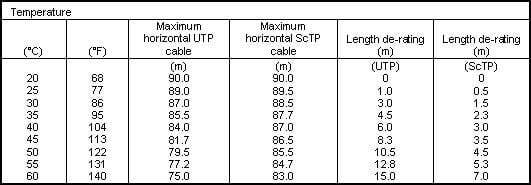
Network cable is rated for data transmission performance under specific environmental conditions. As temperature increases, allowable cable length decreases. Manufacturers publish derating charts showing that as temperature rises, the maximum supported horizontal run length reduces.
For example, at around 20°C a typical horizontal UTP run may support approximately 90 metres. At 60°C, this can reduce to approximately 75 metres. When roof cavity temperatures exceed rated limits, cable runs that are already near maximum length can fall outside specification and become unstable.
Low-resolution systems with short cable runs may never show symptoms. However, high-resolution systems such as 4K IP cameras generate greater bandwidth demand and PoE load. Combined with long cable runs and extreme heat, this can lead to intermittent dropouts until temperatures return to normal operating range.ermittent dropouts or temporary loss of connection until temperatures return to normal operating range.
Water & Humidity
While there are no simple derating charts for humidity alone, water ingress into network cable can significantly affect data reliability.
When water enters Cat5e or Cat6 cable:
- Impedance changes
- Signal attenuation increases
- Crosstalk can worsen
- Electrical stability is reduced
Cables operating close to their maximum rated length are particularly vulnerable. After heavy rain or flooding, these marginal runs may become intermittent or fail entirely until conditions stabilise.
Standard indoor Category 5e and Category 6 cables are designed for dry environments. They are not intended for prolonged moisture exposure.
Outdoor-rated cables incorporate protective measures such as:
- Water-blocking gel
- Barrier tapes
- UV-stabilised jackets
These reduce water migration but increase cost and may affect flexibility or installation requirements.
If a cable absorbs contaminated water (for example floodwater containing cleaning agents, salt, or alkaline substances), internal corrosion may occur. In these cases, replacement is usually required.
What To Do After Heavy Rain
If cameras disappear, behave erratically, or drop out after severe rain and you are using Cat5/5e/6 cable:
- Inspect camera bases and junction boxes for failed seals
- Check roof cavities for leaks
- Allow sufficient drying time before assuming permanent failure
Even after rain stops, ground moisture and high humidity slow evaporation. It may take days or even weeks for performance to stabilise.
Reducing camera resolution temporarily can lower bandwidth demand and help diagnose marginal cable runs. However, this does not fix underlying water ingress.
UV Exposure
Standard indoor Cat5/5e/6 cable is not UV rated. Direct sunlight can cause the outer jacket to degrade and crack, eventually allowing moisture ingress.
External installations should use UV-rated outdoor cable or be fully protected within suitable conduit.